

Gaurdian
Automatically protects known-good application behavior to eliminate drift and correct anomalies early in the development process.

Say goodbye to application interruptions and hello to sustained uptime.
Application drift refers to when the system state at runtime deviates from the intended or expected state. Drift occurs from a variety of reasons; software updates, ad hoc system changes, misconfigurations, etc. Even as we manage configuration through policy as code, drift is inevitable due to the complexity of modern application development environments. Composed of hundreds, sometimes thousands, of discrete components, continuous updates lead to unintended drift and errors, causing downtime and security risk. The only sure-fire way to protect against drift is to monitor for it at runtime.
Auto-generate the right guardrails
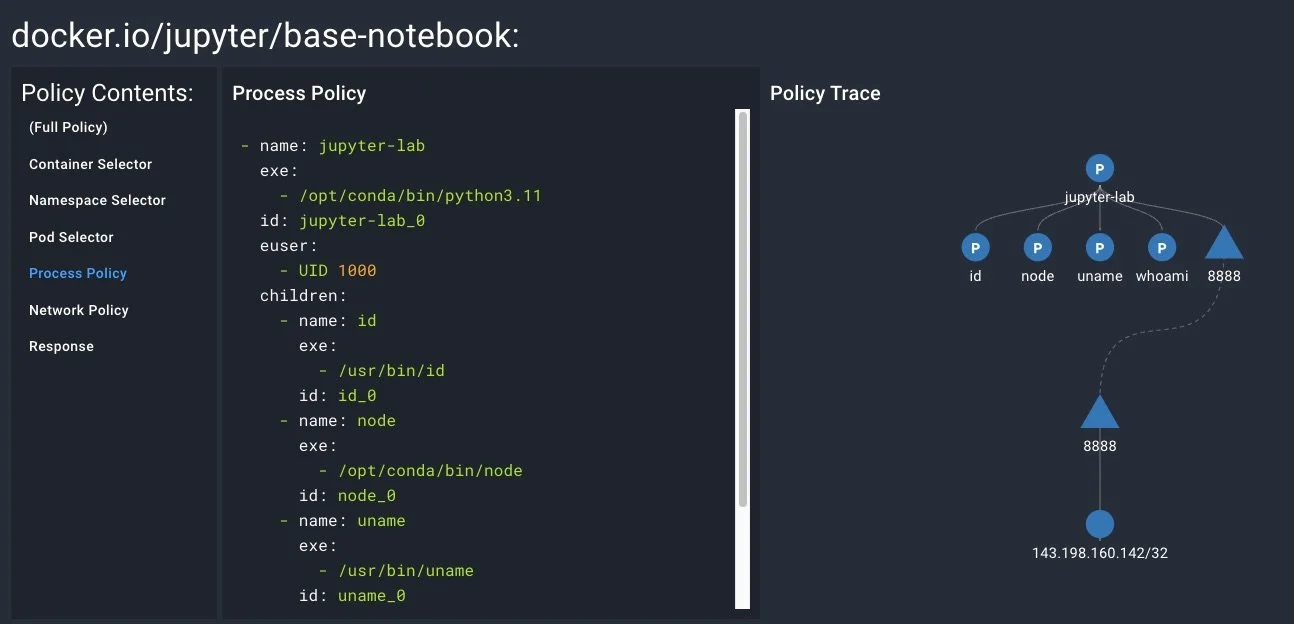
Short-circuit policy creation by capturing your actual observed workload behaviors.
Remove the guesswork and tuning required by ‘out-of-box’ application control policies that do not understand your application behaviors.
Spyderbat suggests policies from how your application behaves at runtime.
Integrate to your GitOps culture
Programmatically validate workload behaviors throughout the development process.
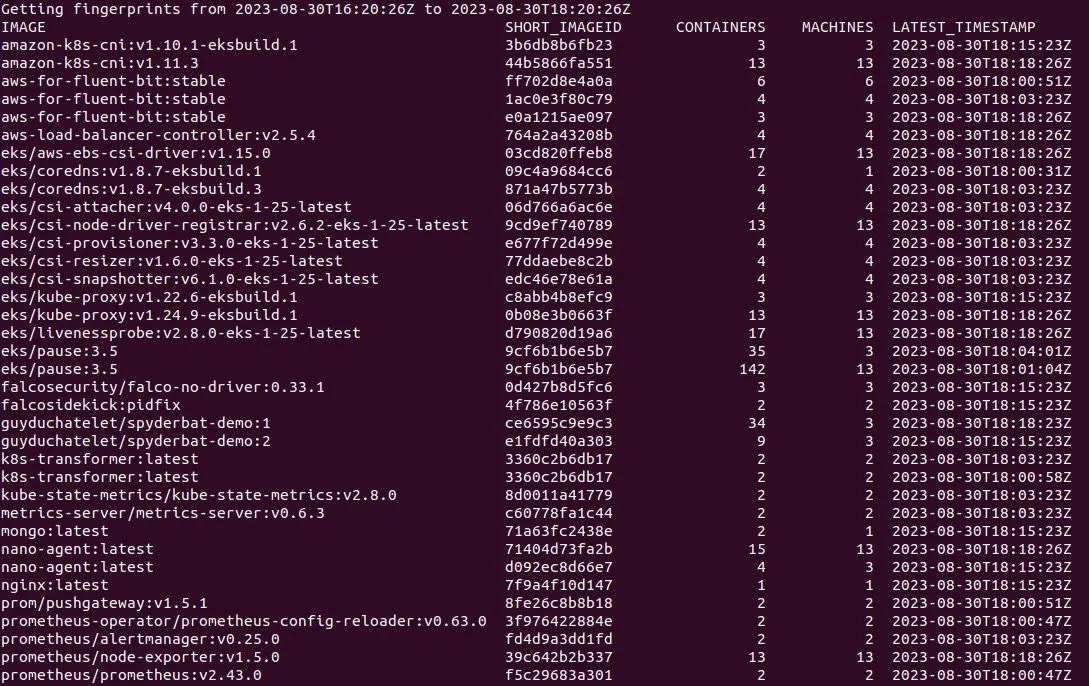
Enable developers to confirm their code’s runtime execution behavior aligned to their build processes.
Whether through CLI, UI, or API, weave Spyderbat into the development culture and catch misconfigurations, supply chain compromise, and insider threats way before they risk production downtime.
Stop Digging. More Building.
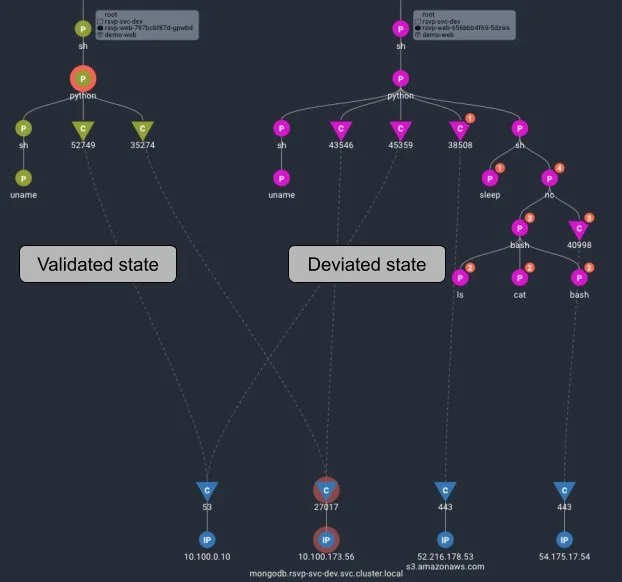
Detects drift from intended states as it occurs.
Eliminate wasted cycles digging through logs to figure out ‘what happened’.
Inspect ‘validated’ and ‘deviated’ states (via UI or YAML) for immediate root cause analysis and fast remediation.
Automate policy violation response
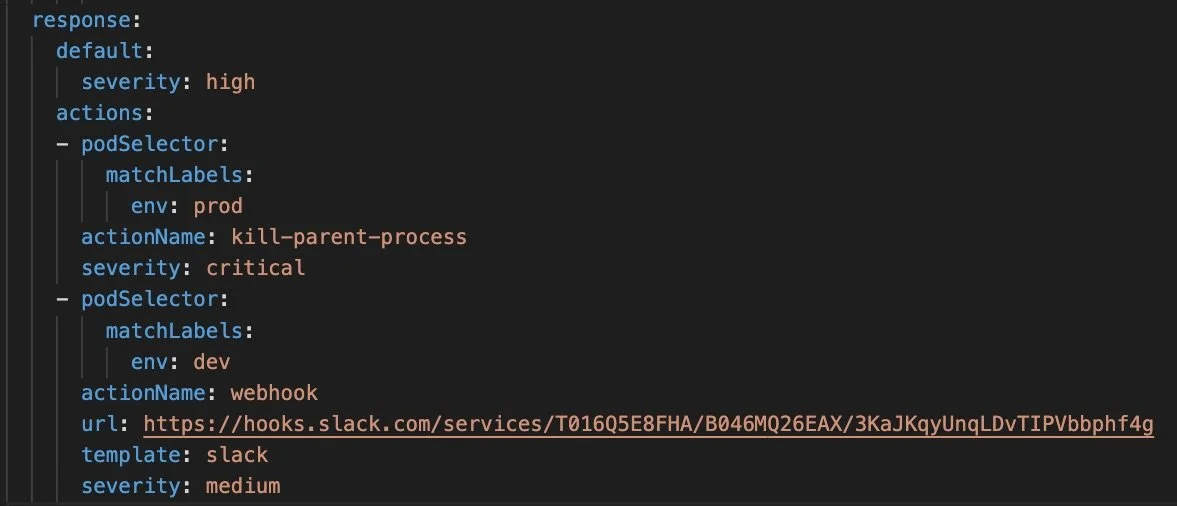
Take the right action based on where it occurs.
For example, the YAML policy in the screenshot:
Flags all policy violations with a high severity.
Sends a slack message to software engineers for violations captured in “dev” pods.
Kills the process tree for violations captured in “prod” pods.
SecOps Protection, DevOps Automation.
CONTACT US
Please contact us by clicking the button, a member of our team will be in touch shortly.