

SecOps Throughout the SDLC
Integrating security throughout the SDLC transforms a traditional, end-of-cycle security review into a continuous, iterative process:

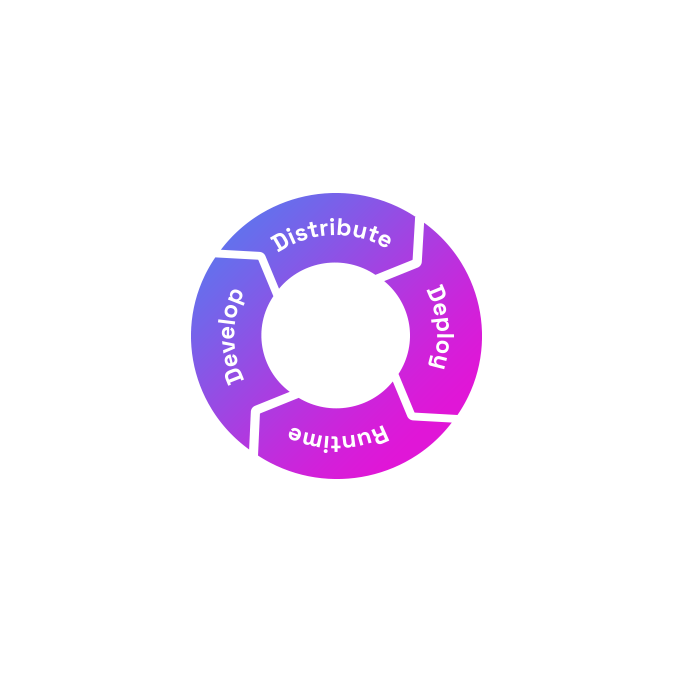
SecOps throughout the Software Development Lifecycle
Spyderbat continually visualizes what’s happening at runtime within and across Cloud and Container workloads, providing automated root cause of security and operations issues, preventing missed attacks, and enabling you to automate your approach to security in the Cloud through:
Plan/Code: Security is a requirement from day one; developers use secure coding practices and static analysis tools (SAST).
Build/Test: Security testing (DAST, IAST) is automated within CI/CD pipelines to block insecure builds.
Deploy: Infrastructure-as-Code (IaC) is scanned for misconfigurations, ensuring a secure production baseline.
Operate (Runtime): Continuous monitoring and threat detection occur in the production environment, feeding operational data back to development teams for improvement (DevSecOps feedback loop).
How Spyderbat Fits In as a Solution
Spyderbat primarily addresses the "Operate" (Runtime) phase of the SDLC, providing the crucial feedback loop that makes "shifting left" effective. It leverages runtime data to refine security throughout the entire cycle:
Runtime Intelligence and Feedback: Spyderbat’s core value is generating "ground truth" data using eBPF, which maps actual workload behavior in production. This intelligence helps developers and SecOps teams understand what "normal" looks like and how applications actually behave in the wild.
Defining Secure Baselines: The platform automatically creates behavioral fingerprints of running applications. These fingerprints can be used as a definition of "secure behavior" that developers can test against earlier in the SDLC.
Incident Response Automation: By providing instant root cause analysis (Spydertraces), Spyderbat drastically cuts down MTTR in production, which is a key SecOps metric. This rapid response prevents runtime incidents from becoming major disruptions.
Bridging Dev and Ops: Spyderbat helps translate operational security incidents back into developer-friendly language by showing exactly which container, pod, or code execution led to an alert, fostering better collaboration and faster remediation at the source.
In summary, Spyderbat doesn't scan code, but it provides the essential runtime security intelligence that defines what needs to be secured and monitoredthroughout the entire SDLC.
CONTACT US
Please contact us by clicking the button, a member of our team will be in touch shortly.